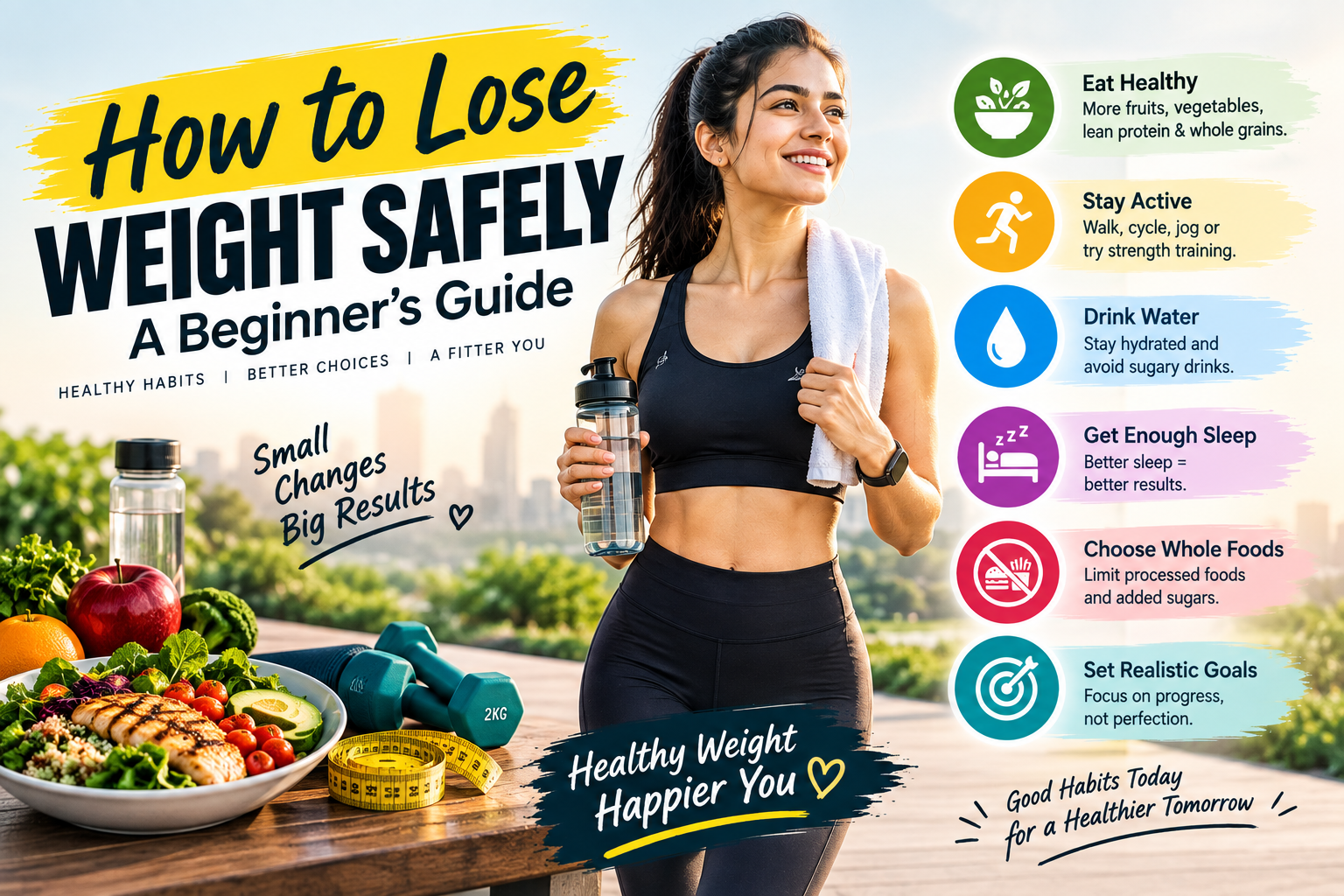
How to Lose Weight Safely: A Beginner’s Guide
Losing weight is a common fitness goal, but the healthiest approach is not about following extreme diets or trying to lose weight as quickly as possible. Sustainable weight management usually comes from developing healthy eating habits, staying physically active, getting enough sleep, and making changes that you can maintain over time.
If you’re just starting your weight-loss journey, focus on progress rather than perfection.
What Does Healthy Weight Loss Mean?
Healthy weight loss means gradually improving your eating and activity habits instead of relying on crash diets or unrealistic promises.
Your individual needs can vary depending on factors such as age, activity level, body composition, and overall health.
1. Create Healthy Eating Habits
A balanced diet can make it easier to manage your overall calorie intake while providing important nutrients.
Try to include:
- Vegetables and fruits
- Whole grains
- Protein-rich foods
- Healthy sources of fats
- Plenty of water
Instead of completely eliminating foods you enjoy, focus on reasonable portions and a balanced overall diet.
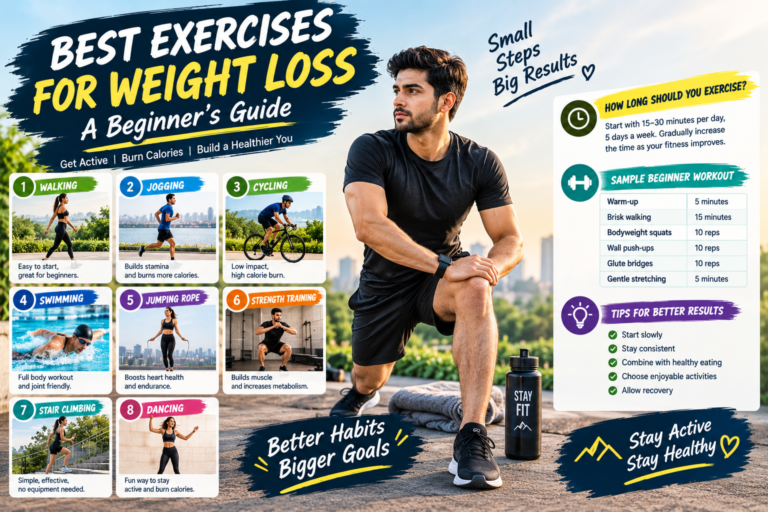
2. Increase Physical Activity
Exercise can support weight management and improve overall fitness.
Begin with activities you enjoy, such as:
- Walking
- Cycling
- Swimming
- Jogging
- Dancing
- Strength training
If you’re new to exercise, start with manageable amounts and gradually increase your activity.
3. Pay Attention to Portion Sizes
Even nutritious foods can contribute to excess calorie intake when eaten in very large portions.
Try using appropriate portions and eating slowly. Paying attention to hunger and fullness can also help you become more aware of how much you’re eating.
4. Drink More Water
Water is essential for normal body functions and can be a useful replacement for sugary drinks.
Instead of regularly choosing soft drinks or other high-calorie beverages, make water your main drink whenever possible.
5. Get Enough Sleep
Sleep is an important part of a healthy lifestyle. Poor sleep can make it harder to maintain healthy eating and activity habits.
Create a consistent sleep schedule and give yourself enough time to rest each night.
6. Reduce Highly Processed Foods
You don’t have to completely eliminate processed foods, but regularly choosing foods high in added sugars, unhealthy fats, or excess calories may make weight management more difficult.
Choose whole or minimally processed foods more often while still allowing room for occasional treats.
7. Set Realistic Goals
Avoid expecting dramatic results within a few days. Sustainable changes take time.
Instead of focusing only on the number on the weighing scale, track other improvements such as:
- Better energy
- Improved fitness
- More consistent workouts
- Healthier eating habits
- Better sleep
A Simple Weight-Loss Routine
A beginner can focus on a few simple habits:
Morning: Start your day with water and a balanced breakfast if you eat breakfast.
Daytime: Stay active and include regular movement such as walking.
Meals: Build balanced meals around vegetables, protein, whole grains, and appropriate portions.
Evening: Choose a light activity such as walking and maintain a consistent bedtime routine.
The exact routine should be adjusted to your lifestyle and individual needs.
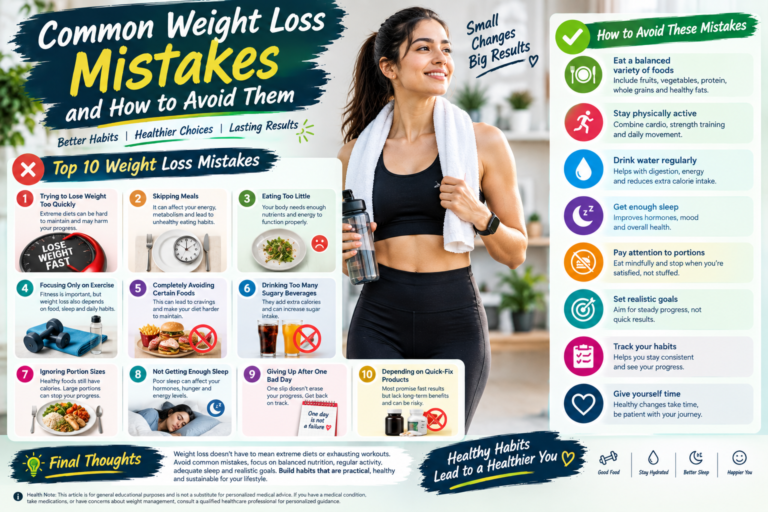
Common Weight-Loss Mistakes
Some common mistakes include:
- Following extremely restrictive diets
- Skipping meals unnecessarily
- Exercising excessively
- Expecting instant results
- Completely avoiding entire food groups without a medical reason
- Depending on unproven weight-loss products
A healthier approach is to make gradual changes that you can maintain.
Final Thoughts
Healthy weight loss is more about building sustainable habits than finding a quick solution. Focus on balanced nutrition, regular physical activity, sufficient sleep, hydration, and realistic goals.
Start with small changes and gradually build a lifestyle that supports your long-term health and fitness.
Health Note: This article is for general educational purposes and is not a substitute for personalized medical advice. Weight-management needs can vary significantly between individuals. If you have a medical condition, take medications, are pregnant, or have concerns about your weight, consult a qualified healthcare professional before making significant changes to your diet or exercise routine.