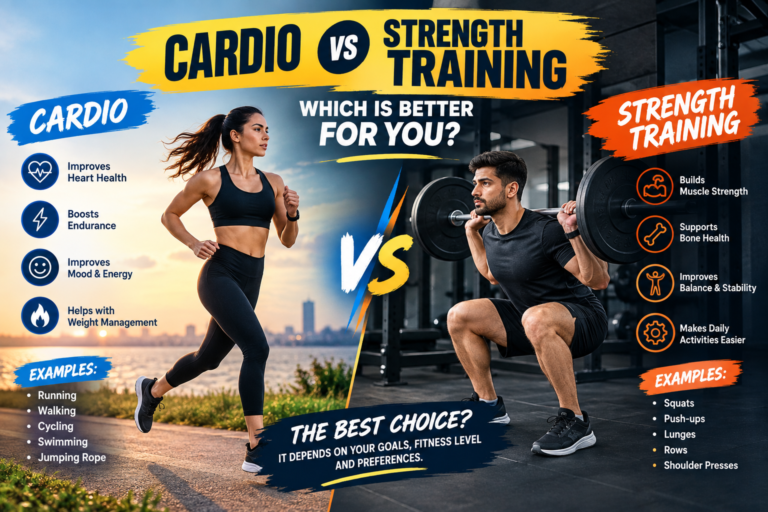
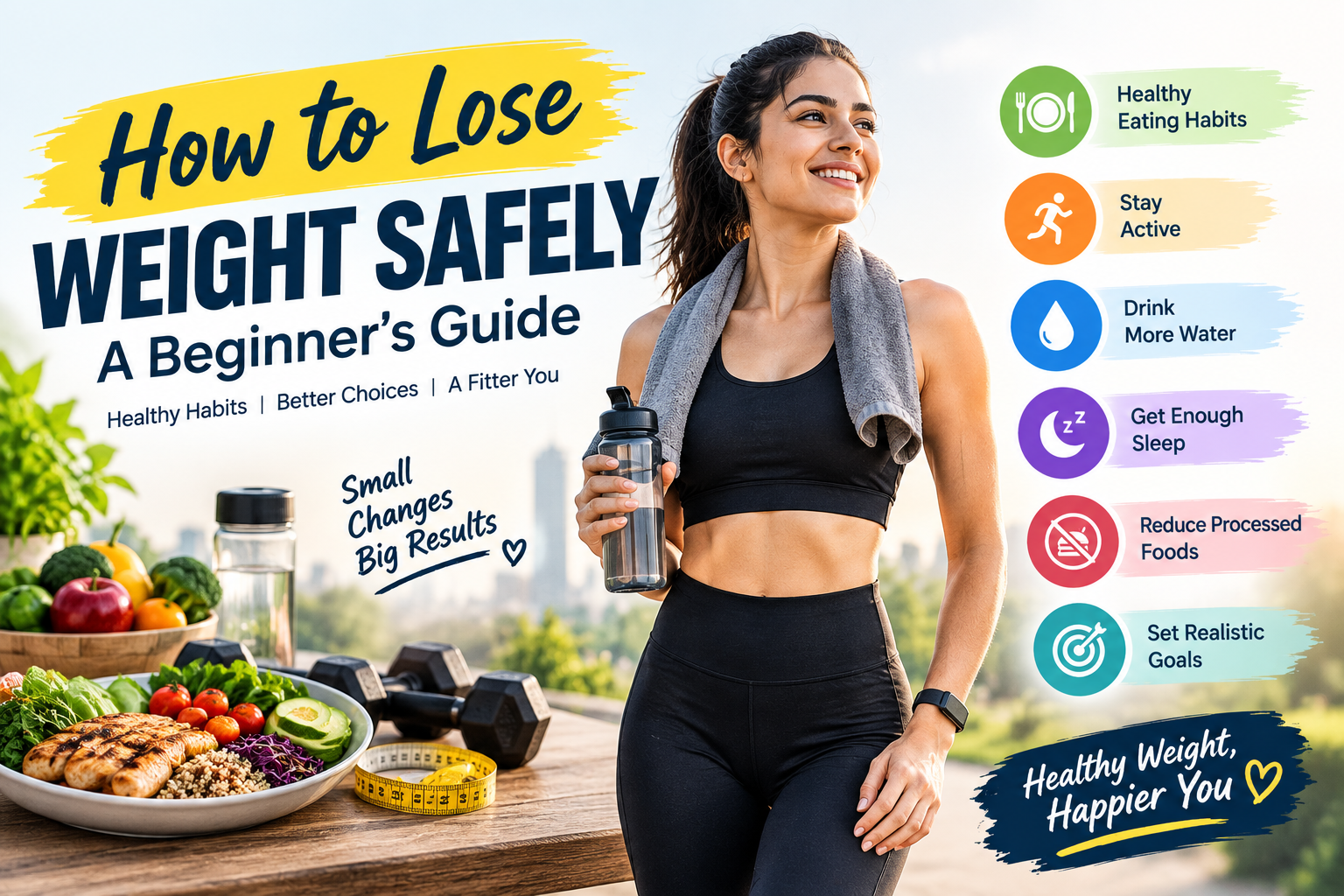
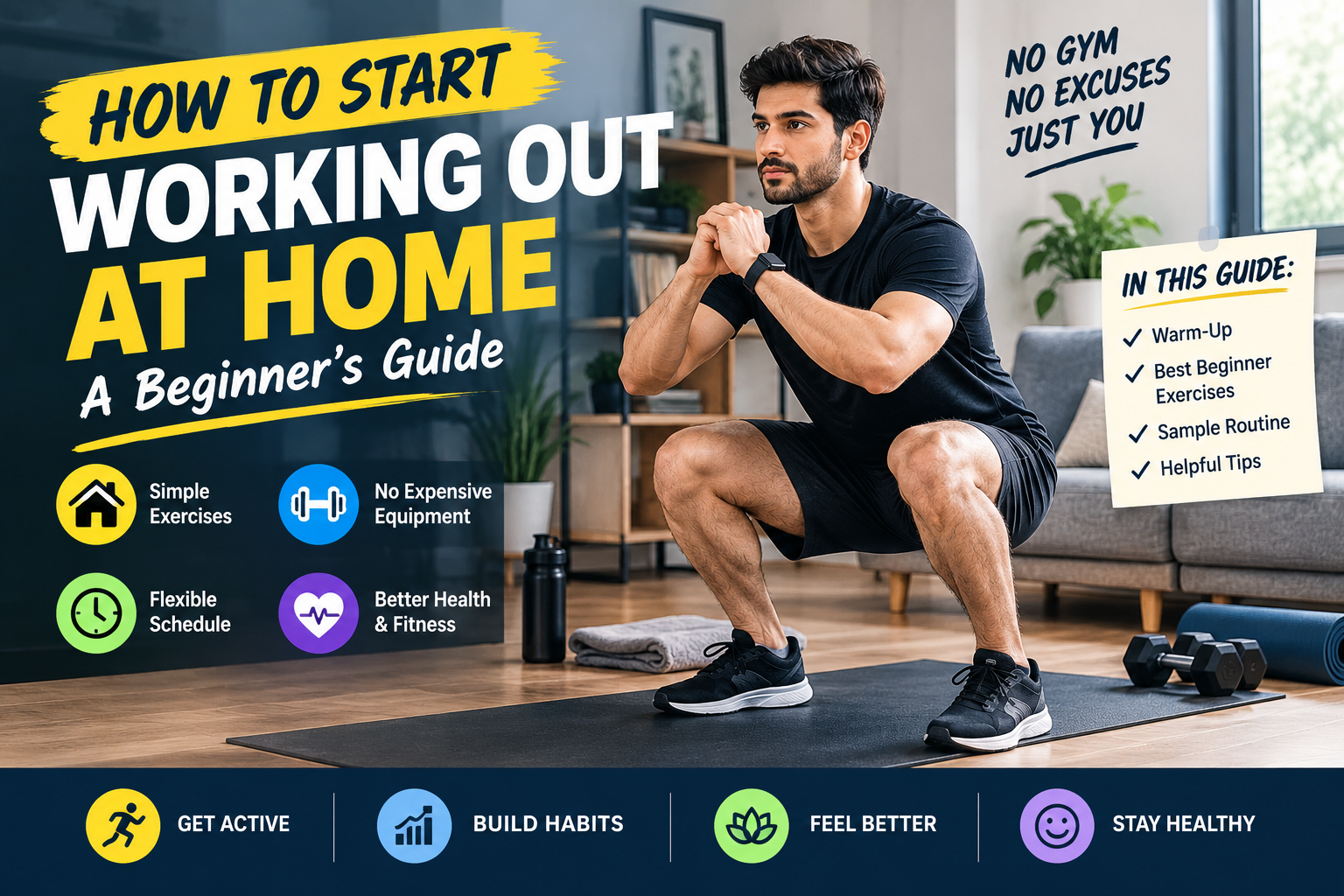
10 Best Exercises for Beginners; How to Start Working Out at Home; Full-Body Workout for Beginners; Cardio vs Strength Training
Starting a fitness journey can feel difficult, especially if you are new to exercise. The good news is that you don’t need expensive equipment or complicated workouts to become more active. Simple exercises performed consistently can help improve strength, mobility, endurance, and overall fitness.
Here are 10 beginner-friendly exercises you can include in your fitness routine.
1. Walking
Walking is one of the easiest ways to start exercising. It can help improve cardiovascular fitness and keep your body active. Beginners can start with 15–20 minutes and gradually increase the duration.
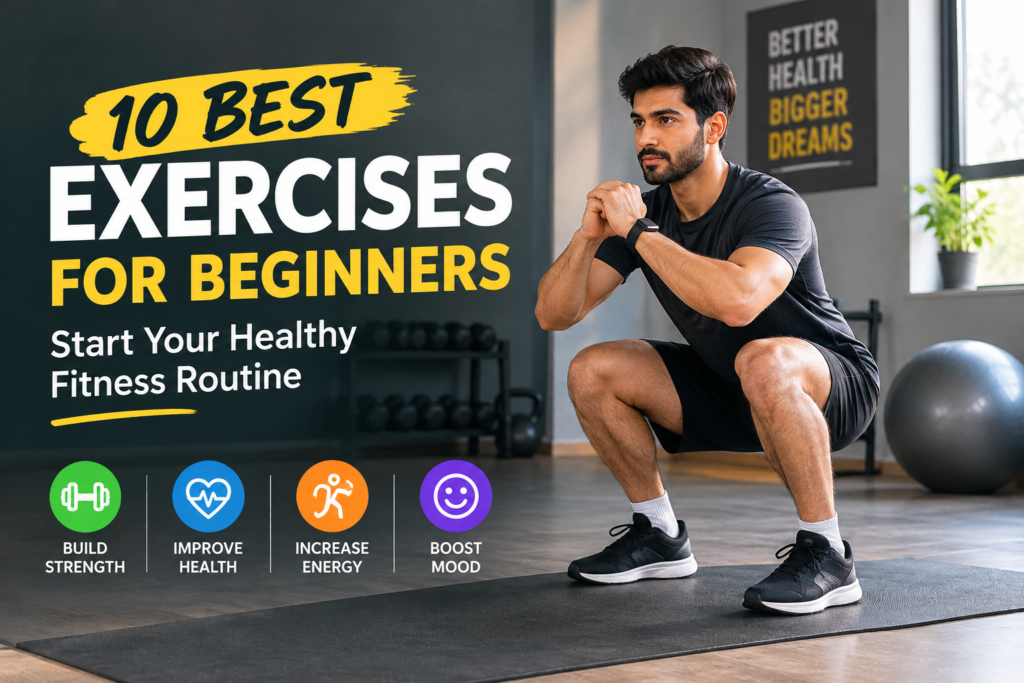
2. Bodyweight Squats
Squats work several muscles in the lower body, including the thighs and glutes. Stand with your feet about shoulder-width apart, lower your hips while keeping your chest up, and return to the starting position.
3. Wall Push-Ups
Wall push-ups are a simple alternative to traditional push-ups. Stand facing a wall, place your hands on it, bend your elbows to bring your body toward the wall, and then push yourself back.
4. Lunges
Lunges can help strengthen the legs and improve balance. Step forward with one foot, lower your body under control, and return to the starting position. Alternate legs.
5. Glute Bridges
Glute bridges primarily target the muscles around your hips and buttocks. Lie on your back with your knees bent, lift your hips toward the ceiling, pause briefly, and lower them slowly.
6. Planks
Planks help strengthen your core. Start with a comfortable version and focus on keeping your body aligned rather than holding the position for a long time.
7. Step-Ups
Step-ups are a simple lower-body exercise. Use a stable, low step or platform, step up carefully, and return to the floor. Alternate legs.
8. Bird-Dog
The bird-dog exercise works your core and challenges balance. Start on your hands and knees, extend one arm and the opposite leg, then return to the starting position and switch sides.
9. Marching in Place
Marching in place is an easy way to raise your heart rate without needing much space. Lift your knees comfortably and move your arms naturally.
10. Gentle Stretching
Stretching can help improve flexibility and mobility. Include gentle stretches for major muscle groups, particularly after your workout when your muscles are warm.
How Often Should Beginners Exercise?
If you are just starting, focus on consistency rather than doing intense workouts every day. Begin with manageable sessions and gradually increase your activity as your fitness improves.
A simple beginner routine could include:
- Walking: 15–30 minutes
- Squats: 8–12 repetitions
- Wall push-ups: 8–12 repetitions
- Glute bridges: 8–12 repetitions
- Plank: 10–30 seconds
- Gentle stretching: 5–10 minutes
You can adjust the routine according to your fitness level and gradually increase the duration or repetitions.
Tips for Starting a Fitness Routine
Start slowly: Don’t try to do too much on your first day.
Focus on technique: Proper form is more important than doing a large number of repetitions.
Stay consistent: Regular activity is more useful than occasional intense workouts.
Listen to your body: Rest when you need to and stop an exercise if you experience pain.
Stay hydrated: Drink enough fluids throughout the day, especially during exercise.
Final Thoughts
You don’t need to be extremely fit to start exercising. Walking, squats, wall push-ups, lunges, planks, and other simple movements can provide a strong foundation for a healthier and more active lifestyle.
Start with exercises that feel manageable, stay consistent, and gradually challenge yourself as your fitness improves.
Health Note: This article is for general educational purposes and isn’t a substitute for personalized medical advice. If you have a medical condition, injury, or concerns about starting exercise, speak with a qualified healthcare professional before beginning a new fitness program