How to Improve Flexibility: Simple Yoga Stretches for Beginners
Flexibility is the ability of your muscles and joints to move through a comfortable range of motion. Good flexibility can make everyday movements easier and can be an important part of overall physical fitness.
You do not need to be naturally flexible to practice yoga or stretching. With regular, gentle practice, many beginners can gradually improve their mobility and flexibility.
Why Is Flexibility Important?
Maintaining flexibility can help you move more comfortably during everyday activities and exercise. It can also support good posture, mobility, balance, and body awareness.
Flexibility varies from person to person, so it is important to focus on gradual progress rather than comparing yourself with others.
1. Cat-Cow Stretch
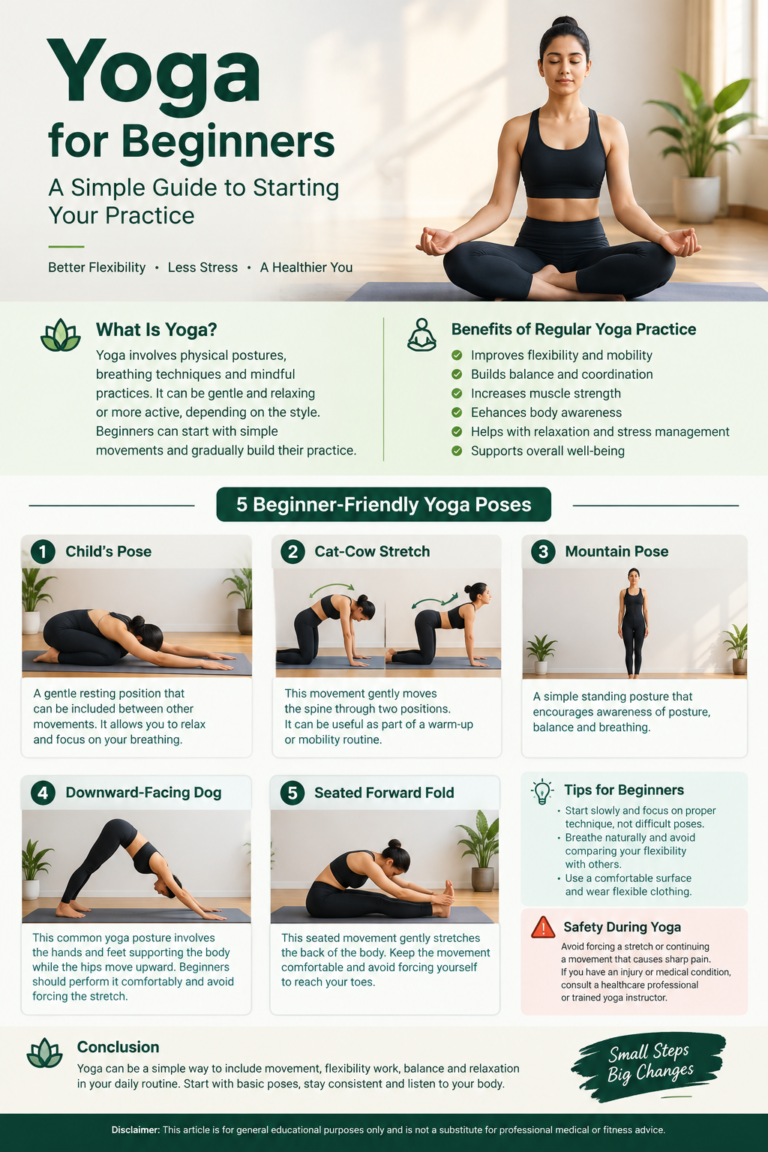
Start on your hands and knees. Slowly move your spine between a rounded position and a gently extended position while coordinating the movement with your breathing.
This can be a simple way to warm up the spine and improve movement awareness.
2. Child’s Pose
From a kneeling position, gently lower your body toward your heels and extend your arms forward.
Hold the position comfortably while breathing slowly. Do not force your body into the stretch.
3. Standing Forward Fold
Stand comfortably and slowly bend forward from your hips. Allow your upper body to relax without forcing your hands toward the floor.
This movement can gently stretch the back of the legs and body.
4. Low Lunge
Step one foot forward while keeping the other knee behind you. Lower your hips gently and maintain a comfortable position.
This movement can help work on mobility around the hips and legs.
5. Butterfly Stretch
Sit comfortably, bring the soles of your feet together, and allow your knees to move gently toward the floor.
Keep your back comfortable and avoid pushing your knees down forcefully.
Tips for Improving Flexibility
Practice Regularly
Short, consistent stretching sessions can be more practical than occasional long sessions. Choose a routine that fits comfortably into your schedule.
Warm Up First
Gentle movement before stretching can help prepare your body. Try walking or other light movements for a few minutes.
Don’t Force a Stretch
Stretching should feel controlled and comfortable. Avoid bouncing or forcing a joint into a position.
Breathe Normally
Slow and natural breathing can help you stay relaxed while performing stretches.
Be Patient
Flexibility usually develops gradually. Your progress may be different from someone else’s, so focus on your own range of motion and consistency.
Safety During Stretching
Stop an exercise if you experience sharp or significant pain. If you have an injury, medical condition, or concerns about a particular stretch, speak with a qualified healthcare professional or trained fitness professional before starting.
Conclusion
Improving flexibility does not require advanced yoga skills. Simple movements such as Cat-Cow, Child’s Pose, Forward Fold, Low Lunge, and Butterfly Stretch can be included in a beginner-friendly routine.
Practice gently, stay consistent, and give your body time to adapt. With patience and regular movement, you can work toward better flexibility and mobility.
Disclaimer: This article is for general educational purposes only and is not a substitute for professional medical or fitness advice.