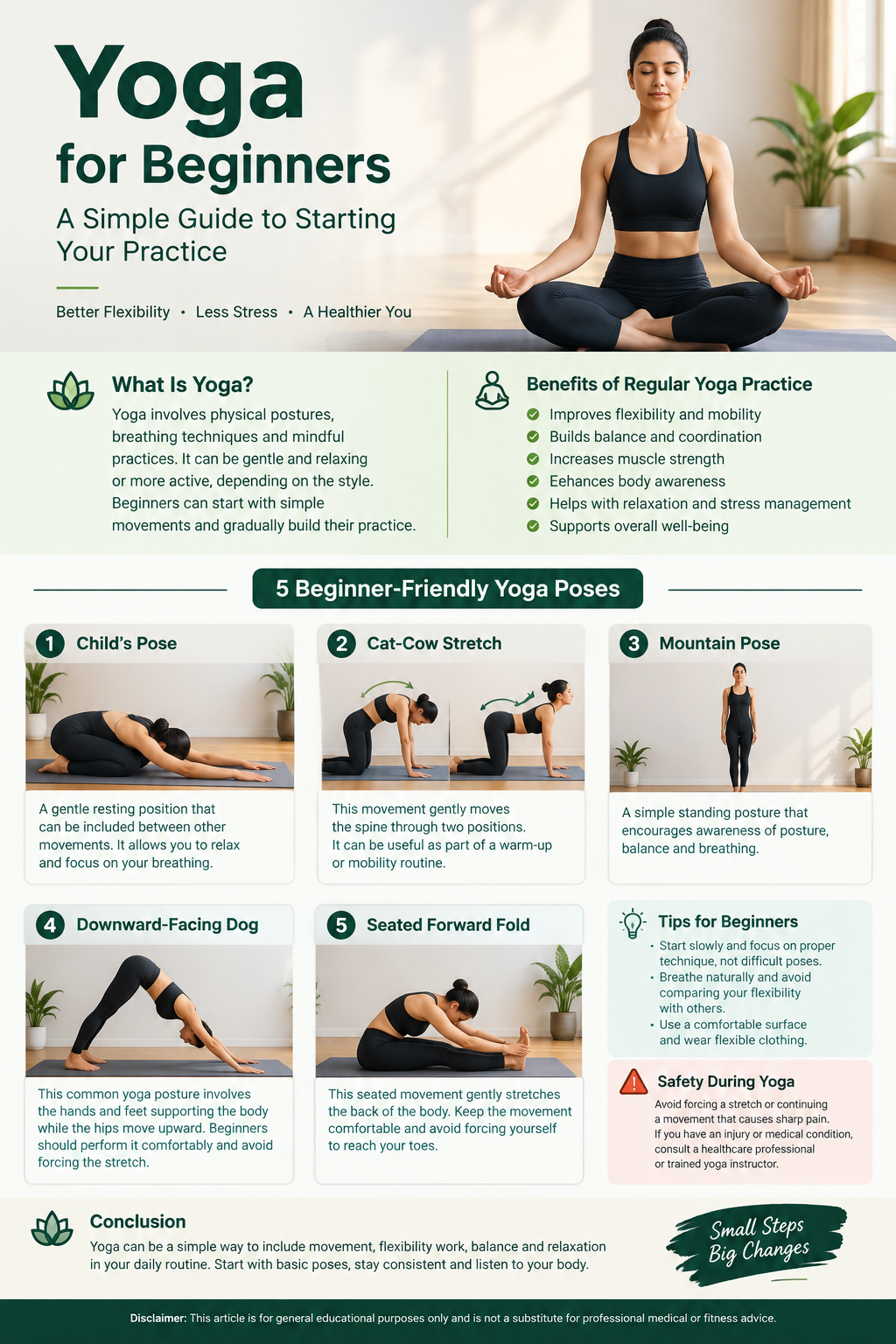
Yoga for Beginners: A Simple Guide to Starting Your Practice
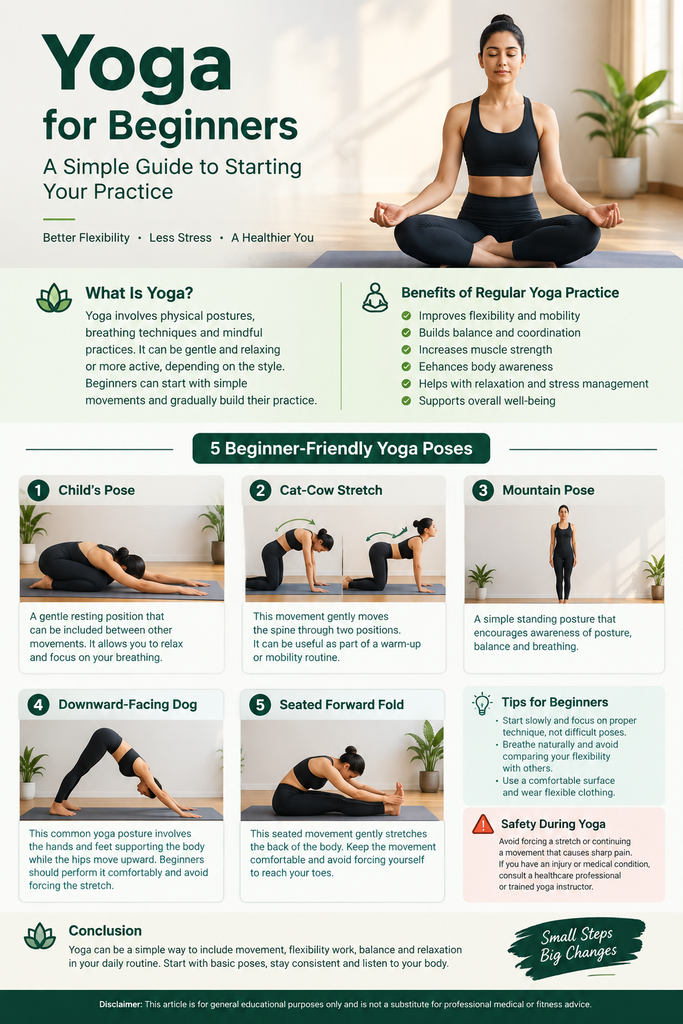
Yoga is a form of physical and mindful practice that combines movement, breathing, balance, and relaxation. People practice yoga for many different reasons, including improving flexibility, mobility, strength, body awareness, and relaxation.
If you are new to yoga, you do not need to be highly flexible or experienced. Beginners can start with simple movements and gradually build their practice.
What Is Yoga?
Yoga involves different physical postures, breathing techniques, and mindful practices. Some styles can be gentle and relaxing, while others may involve more active movements.
A beginner-friendly yoga routine can focus on comfortable movement, controlled breathing, and proper body awareness.
Benefits of Regular Yoga Practice
A consistent yoga routine may help support:
- Flexibility and mobility
- Balance and coordination
- Muscle strength
- Body awareness
- Relaxation and stress management
- Overall physical well-being
The benefits can vary from person to person, depending on the type and consistency of practice.
5 Beginner-Friendly Yoga Poses
1. Child’s Pose
Child’s Pose is a gentle resting position that can be included between other movements. It allows you to relax and focus on your breathing.
2. Cat-Cow Stretch
This movement gently moves the spine through two positions. It can be useful as part of a warm-up or mobility routine.
3. Mountain Pose
Mountain Pose is a simple standing posture that encourages awareness of posture, balance, and breathing.
4. Downward-Facing Dog
This common yoga posture involves the hands and feet supporting the body while the hips move upward. Beginners should perform it comfortably and avoid forcing the stretch.
5. Seated Forward Fold
This seated movement gently stretches the back of the body. Keep the movement comfortable and avoid forcing yourself to reach your toes.
Tips for Beginners
Start slowly and focus on learning the correct technique rather than trying to achieve difficult poses. Breathe naturally and avoid comparing your flexibility with someone else’s.
Using a comfortable surface and wearing clothing that allows easy movement can also make your practice more enjoyable.
Safety During Yoga
Yoga should feel controlled and comfortable. Avoid forcing a stretch or continuing a movement that causes sharp or significant pain.
If you have an injury, medical condition, or concerns about whether a particular yoga practice is suitable for you, consider speaking with a qualified healthcare professional or trained yoga instructor.
Conclusion
Yoga can be a simple way to include movement, flexibility work, balance, and relaxation in your daily routine. Beginners can start with basic poses and gradually improve their comfort and mobility over time.
Consistency is more important than trying to perform advanced poses. Start at your own level, listen to your body, and progress gradually.
Disclaimer: This article is for general educational purposes only and is not a substitute for professional medical or fitness advice.