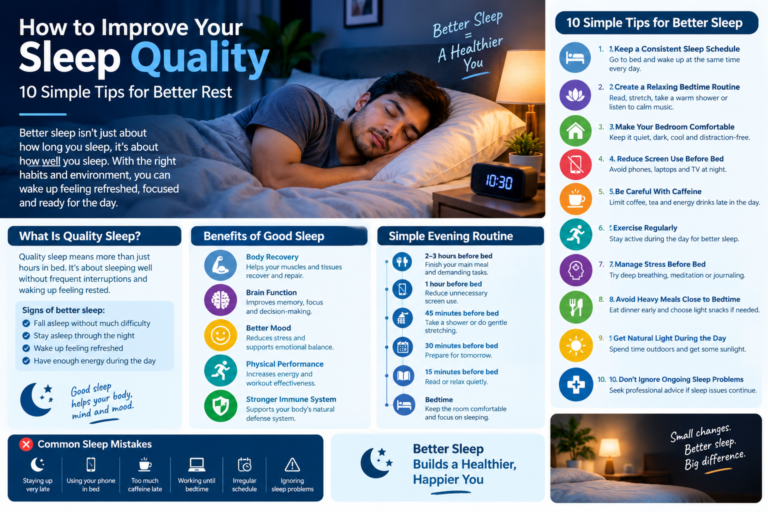
How to Improve Sleep Quality Naturally: Simple Tips for Better Recovery
Good sleep is one of the most important parts of a healthy lifestyle. While many people focus on exercise and nutrition, sleep is equally important for physical recovery, mental focus, energy, and overall well-being. Poor sleep can leave you feeling tired, distracted, and less motivated throughout the day.
The good news is that you can improve your sleep quality naturally by making a few simple changes to your daily routine.
1. Maintain a Consistent Sleep Schedule
Try to go to bed and wake up at approximately the same time every day. A consistent schedule helps your body develop a natural sleep rhythm.
Even on weekends, avoid changing your sleep schedule too much. Consistency can make it easier to fall asleep and wake up naturally.
2. Create a Relaxing Nighttime Routine
Your body needs time to prepare for sleep. Spend the last 30–60 minutes before bedtime doing relaxing activities.
You can try:
- Reading a book
- Taking a warm shower
- Practicing deep breathing
- Listening to calm music
- Doing light stretching
A relaxing routine can help signal to your body that it is time to rest.
3. Reduce Screen Time Before Bed
Phones, laptops, and televisions can keep your mind active when you should be preparing for sleep. Try to reduce screen use before bedtime.
Instead of scrolling through social media, consider reading, stretching, or simply relaxing in a quiet environment.
4. Make Your Bedroom Comfortable
Your sleeping environment can have a big impact on sleep quality. Keep your bedroom comfortable, quiet, and dark whenever possible.
A comfortable mattress and pillow can also help you maintain a good sleeping position throughout the night.
5. Be Careful With Caffeine
Caffeine can stay in your system for several hours and may make it harder to fall asleep. If you are sensitive to caffeine, avoid consuming coffee, energy drinks, or other caffeinated beverages late in the day.
Try switching to water or a caffeine-free drink in the evening.
6. Exercise During the Day
Regular physical activity can support better sleep and recovery. Walking, strength training, yoga, cycling, or other forms of exercise can help you stay active during the day.
However, if intense exercise close to bedtime makes you feel more alert, schedule your workouts earlier.
7. Avoid Heavy Meals Before Bed
Eating a very heavy meal immediately before sleeping may make you feel uncomfortable. Try to finish your main meal a few hours before bedtime when possible.
If you are hungry later, choose a light snack rather than a very large meal.
8. Manage Stress Before Sleeping
Stress and an overactive mind can make it difficult to fall asleep. Try writing down your thoughts or tomorrow’s tasks before going to bed.
Simple breathing exercises and meditation can also help you relax.
9. Give Your Body Enough Time to Recover
Adults generally need around 7–9 hours of sleep per night, although individual needs can vary. Getting enough sleep gives your body more time to recover from daily activities and exercise.
If you regularly feel tired during the day despite getting enough time in bed, consider discussing it with a healthcare professional.
Conclusion
Improving sleep quality does not always require complicated changes. A consistent sleep schedule, relaxing bedtime routine, comfortable bedroom, regular exercise, and reduced evening screen time can all support healthier sleep habits.
Remember that recovery is an important part of a healthy lifestyle. When you give your body enough time to rest and recover, you can feel more energetic and ready for the day ahead.