Sleep and Muscle Recovery: How Rest Helps Your Body Recover After Exercise
Exercise challenges your body, but the workout itself is only one part of becoming fitter and stronger. Recovery is equally important, and sleep plays a major role in giving your body time to rest between workouts.
Whether you enjoy gym workouts, running, sports, yoga, or home exercise, a good recovery routine can help you stay consistent and feel ready for your next session.
Why Is Recovery Important?
When you exercise, your muscles and body systems experience physical stress. Your body then needs time to recover and adapt.
Recovery involves more than simply taking a day off. It can include:
- Quality sleep
- Rest days
- Nutritious meals
- Adequate hydration
- Light movement
- Managing training intensity
Without enough recovery, you may feel unusually tired and find it harder to maintain your normal workout routine.
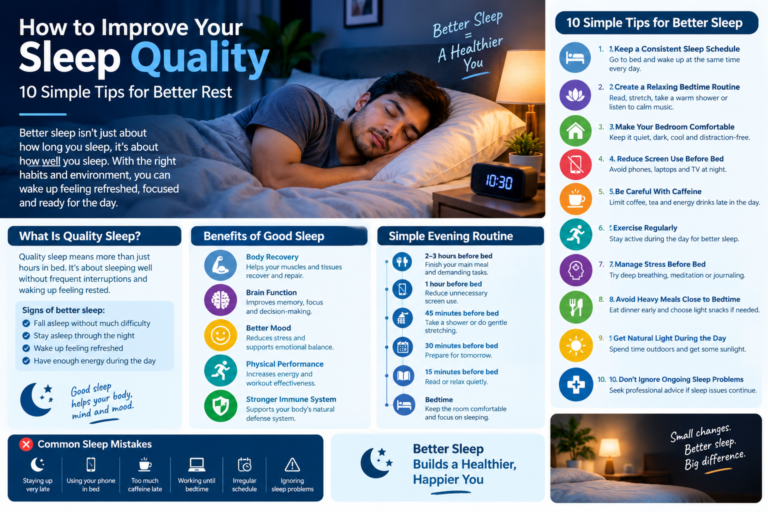
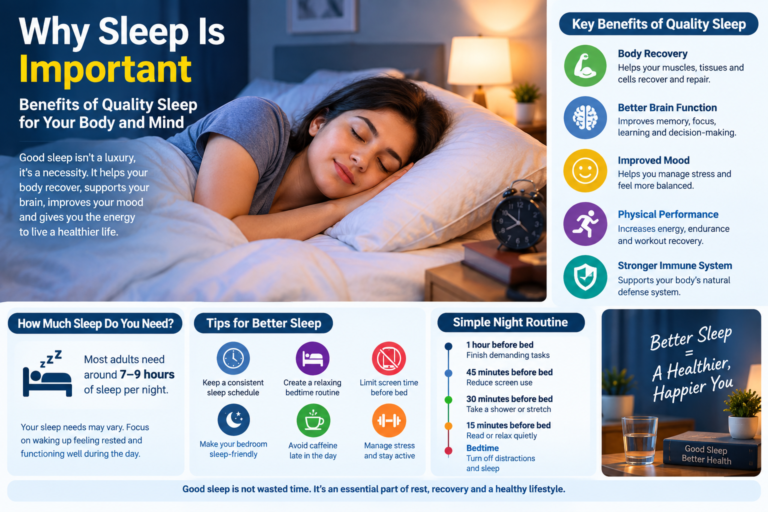
How Does Sleep Support Muscle Recovery?
Sleep gives your body an extended period of rest. During sleep, your body carries out many normal processes involved in tissue maintenance and recovery.
For people who exercise regularly, consistent sleep is therefore an important part of a balanced fitness routine.
Instead of thinking of sleep as separate from exercise, consider it one part of your overall recovery plan.
1. Sleep Helps You Feel More Energized
A hard workout can leave you physically tired. Quality sleep helps you feel more refreshed for the next day.
When you consistently sleep poorly, everyday activities and workouts may feel more difficult.
A good recovery routine should therefore include enough time for restful sleep.
2. Sleep Supports Physical Recovery
Your body needs time to recover from physical activity.
During sleep, your body continues normal processes that support tissue maintenance and physical recovery.
This is one reason why constantly training without allowing enough recovery time is not a good approach.
3. Sleep Supports Exercise Performance
Your physical performance depends on more than your workout plan.
Sleep can influence factors such as:
- Energy
- Concentration
- Coordination
- Reaction time
- Motivation
- Ability to follow your training plan
Getting consistent sleep can therefore be an important part of preparing for your next workout.
4. Recovery Is Important for Beginners Too
You don’t have to be an advanced athlete to care about recovery.
Beginners can also benefit from allowing their bodies enough time to adjust to new physical activity.
If you recently started exercising, avoid trying to do intense workouts every day simply because you are motivated.
Start gradually and give your body time to adapt.
5. Don’t Forget Rest Days
More exercise is not always better.
Rest days give you an opportunity to recover between training sessions. Your ideal schedule depends on your fitness level, workout intensity, goals, and individual circumstances.
On a rest day, you can choose gentle activities such as:
- Easy walking
- Light stretching
- Gentle mobility exercises
- Relaxation
The goal is to avoid unnecessarily intense training when your body needs recovery.
6. Eat for Recovery
Sleep is important, but nutrition also plays a role in recovery.
After exercise, aim for balanced meals that provide nutrients your body needs.
Include a combination of:
- Protein-rich foods
- Whole grains or other carbohydrate sources
- Fruits and vegetables
- Healthy fats
- Fluids
You don’t need an overly complicated diet. Focus on balanced, nutritious meals throughout the day.
7. Stay Hydrated
Exercise can increase fluid needs, particularly during hot weather or longer workouts.
Drink fluids regularly throughout the day and replace fluids lost through exercise.
Hydration needs vary depending on factors such as activity level, climate, body size, and individual needs.
8. Create a Post-Workout Recovery Routine
After exercising, give yourself time to gradually transition back to normal activity.
A simple recovery routine could include:
Step 1: Cool down with easy movement.
Step 2: Drink fluids.
Step 3: Eat a balanced meal or snack when appropriate.
Step 4: Do gentle stretching if it feels comfortable.
Step 5: Give your body adequate rest.
Step 6: Prioritize quality sleep that night.
9. Listen to Your Body
Everyone responds differently to exercise.
Pay attention to signs that you may need more recovery, such as:
- Unusual or persistent fatigue
- Reduced exercise performance
- Muscle soreness that doesn’t improve
- Difficulty completing your normal workouts
- Lack of motivation to exercise
These signs don’t automatically mean you are overtraining, but they can be a reason to reduce intensity and prioritize recovery.
10. Build a Balanced Weekly Routine
A good fitness routine should include a mixture of training and recovery.
For example:
Monday: Strength training
Tuesday: Light cardio or walking
Wednesday: Strength training
Thursday: Rest or gentle mobility
Friday: Full-body workout
Saturday: Light activity
Sunday: Rest
Your schedule can be adjusted according to your fitness level and goals.
Simple Sleep and Recovery Checklist
Before going to bed, ask yourself:
- Did I get enough movement today?
- Did I drink enough fluids?
- Did I eat balanced meals?
- Did I allow my body enough recovery time?
- Did I reduce unnecessary screen use before bed?
- Is my bedroom comfortable?
- Am I giving myself enough time to sleep?
You don’t need every answer to be perfect. Use the checklist as a simple reminder to take care of your recovery.
Final Thoughts
Exercise helps challenge your body, while recovery gives your body time to adapt and rest. Sleep is one of the most important parts of that recovery process.
Combine regular exercise with balanced nutrition, hydration, rest days, and consistent sleep. Instead of focusing only on how hard you can train, pay attention to how well you recover.
A balanced approach can help you build healthier and more sustainable fitness habits over time.
Health Note: This article provides general wellness information and is not a substitute for professional medical advice. If you experience persistent pain, unusual fatigue, injury, or other concerning symptoms after exercise, consult a qualified healthcare professional.