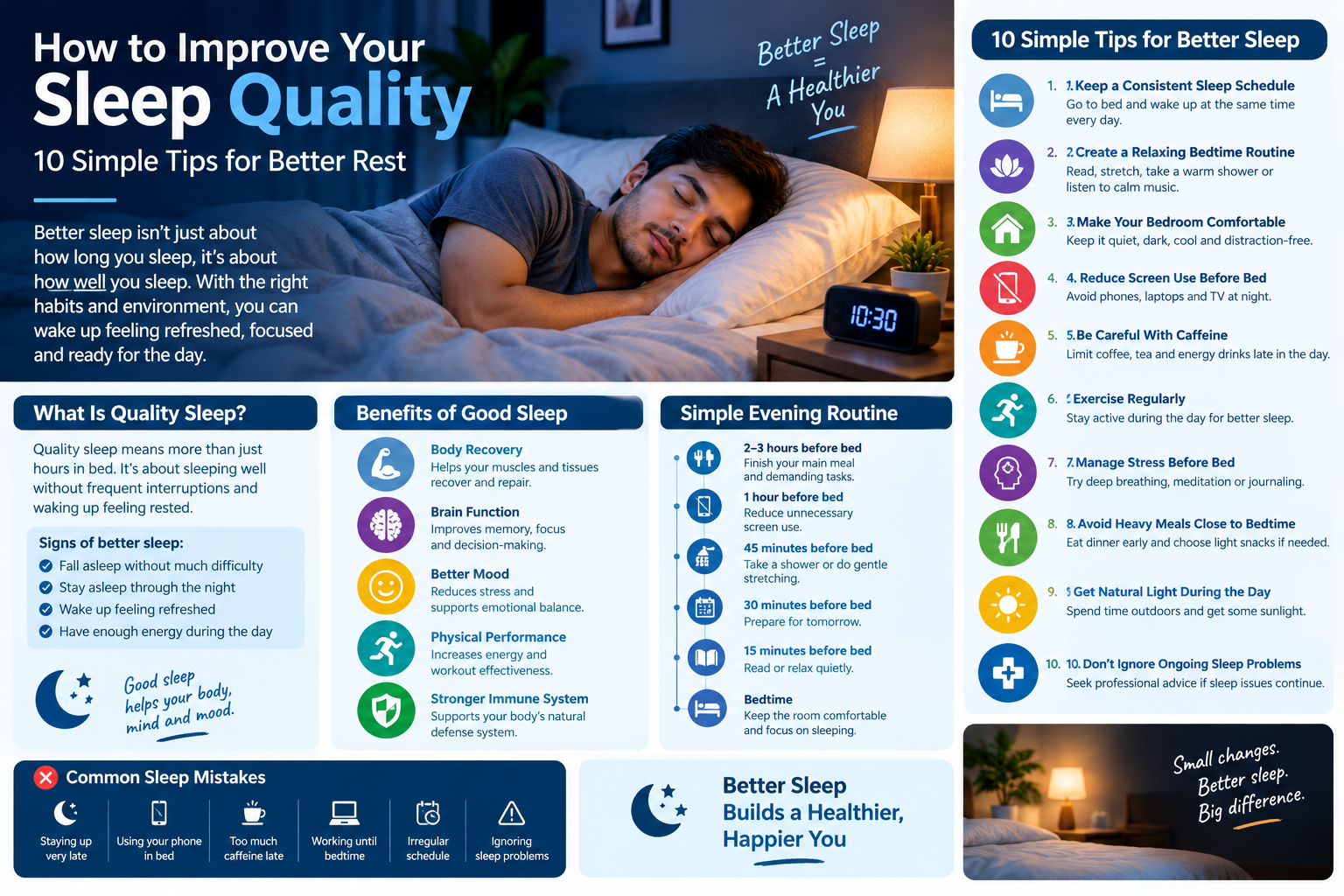
How to Improve Your Sleep Quality: 10 Simple Tips for Better Rest
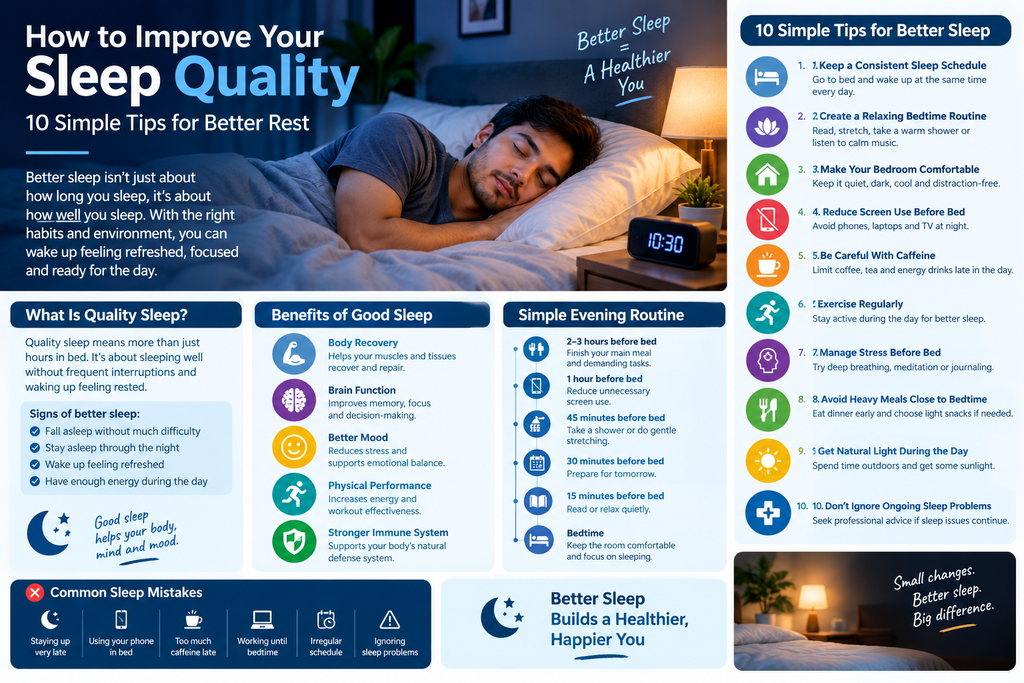
Getting enough sleep is important, but sleep quality also matters. You may spend enough time in bed and still wake up feeling tired if your sleep routine or environment is not ideal.
The good news is that improving your sleep does not always require major changes. Simple habits such as maintaining a regular schedule, creating a comfortable bedroom, managing evening screen time, and developing a relaxing bedtime routine can make your nights more restful.
What Is Sleep Quality?
Sleep quality refers to how well you sleep rather than simply how long you sleep.
Signs of better sleep may include:
- Falling asleep without excessive difficulty
- Staying asleep through most of the night
- Waking up feeling reasonably refreshed
- Having enough energy for your daily activities
Sleep needs and patterns can vary from person to person.
1. Keep a Consistent Sleep Schedule
Try to go to bed and wake up at approximately the same time each day.
A regular schedule can help your body become accustomed to a predictable sleep routine.
Even on weekends, avoid making your sleep and wake times drastically different whenever possible.
2. Create a Relaxing Bedtime Routine
Your body needs time to transition from an active day to sleep.
Create a simple routine during the 30–60 minutes before bedtime.
You could:
- Read a book
- Take a warm shower
- Practice gentle stretching
- Listen to calm music
- Prepare your clothes for the next day
- Spend some quiet time relaxing
Choose activities that make you feel comfortable and relaxed.
3. Make Your Bedroom Comfortable
Your sleeping environment can have a major influence on your ability to rest.
Try to keep your bedroom:
- Quiet
- Comfortable
- Dark or suitably dim
- At a comfortable temperature
- Free from unnecessary distractions
A comfortable mattress and pillow can also help create a better sleeping environment.
4. Reduce Screen Use Before Bed
Phones, tablets, computers, and televisions can keep you mentally engaged when you’re trying to wind down.
Try reducing unnecessary screen use before bedtime.
Instead of scrolling through social media in bed, consider reading, listening to relaxing music, or doing gentle stretching.
5. Be Careful With Caffeine
Caffeine can affect sleep, especially when consumed later in the day.
Coffee, tea, energy drinks, and some other beverages can contain caffeine.
If you notice that caffeine makes it harder for you to sleep, consider limiting it later in the day.
6. Exercise Regularly
Regular physical activity can be part of a healthy sleep routine.
Activities such as:
- Walking
- Cycling
- Strength training
- Yoga
- Swimming
- Home workouts
can help you stay physically active during the day.
However, if exercising close to bedtime makes you feel too energized, try scheduling intense workouts earlier in the day.
7. Manage Stress Before Bed
A busy or stressful mind can make it difficult to relax at night.
Before bed, try writing down your next day’s tasks or concerns. This can help you organize your thoughts rather than repeatedly thinking about them while trying to sleep.
Other relaxing activities include:
- Deep breathing
- Meditation
- Reading
- Gentle stretching
- Listening to calm music
8. Avoid Heavy Meals Close to Bedtime
Eating a very large meal shortly before going to bed may make some people feel uncomfortable.
Try to give yourself enough time to digest your evening meal before going to sleep.
If you need a snack later, choose something light that suits your dietary needs.
9. Get Natural Light During the Day
Spending some time outdoors during the day can be a useful part of a healthy daily routine.
Morning or daytime outdoor activities such as walking can combine movement and natural light.
Try to spend less time indoors continuously if your schedule allows.
10. Don’t Ignore Ongoing Sleep Problems
Occasional poor sleep can happen to anyone. However, persistent sleep difficulties deserve attention.
If you regularly:
- Have trouble falling asleep
- Wake up repeatedly during the night
- Wake up feeling exhausted
- Feel excessively sleepy during the day
- Experience ongoing problems with your sleep
consider discussing the issue with a qualified healthcare professional.
A Simple Evening Routine
Here’s an example of a simple routine you can try:
2–3 hours before bed: Finish your main meal and demanding tasks.
1 hour before bed: Reduce unnecessary screen use.
45 minutes before bed: Take a shower or do gentle stretching.
30 minutes before bed: Prepare for tomorrow.
15 minutes before bed: Read or relax quietly.
Bedtime: Keep the room comfortable and focus on sleeping.
You can adjust this routine according to your lifestyle.
Common Sleep Mistakes
Avoiding a few common mistakes can make your sleep routine easier to maintain.
Try not to:
- Stay up very late regularly
- Use your phone continuously in bed
- Drink large amounts of caffeine late in the day
- Work until the moment you try to sleep
- Keep an irregular sleep schedule
- Ignore persistent sleep problems
You don’t have to change everything at once. Start with one or two habits and gradually build a better routine.
Final Thoughts
Improving sleep quality is often about creating the right environment and developing consistent habits.
Maintain a regular sleep schedule, create a relaxing bedtime routine, stay active during the day, manage stress, and make your bedroom comfortable.
Most importantly, don’t expect perfection. Small improvements made consistently can help you develop healthier sleep habits over time.
Health Note: This article provides general wellness information and is not a substitute for professional medical advice. If you have persistent sleep difficulties or excessive daytime sleepiness, consider speaking with a qualified healthcare professional.