Why Sleep Is Important: Benefits of Quality Sleep for Your Body and Mind
Sleep is one of the most important parts of a healthy lifestyle. While you sleep, your body gets time to rest and your mind gets a chance to recover from the activities of the day.
Getting enough quality sleep can support your energy, concentration, mood, physical recovery, and overall well-being. However, busy schedules, stress, screen time, and irregular routines can make it difficult to get good sleep.
Understanding why sleep matters is the first step toward building better sleep habits.
What Is Quality Sleep?
Quality sleep is not only about the number of hours you spend in bed. It also involves sleeping well without frequent interruptions and following a reasonably consistent sleep schedule.
A good night’s sleep should leave you feeling rested and ready to start your day.
1. Sleep Helps Your Body Recover
Your body is constantly working throughout the day. Sleep provides an important period of rest and recovery.
During sleep, your body carries out processes that support normal physical recovery. This is especially important for people who exercise regularly or have physically demanding routines.
Good sleep can be an important part of a balanced fitness and recovery plan.
2. Sleep Supports Brain Function
Sleep plays an important role in learning, memory, attention, and concentration.
When you don’t sleep well, you may find it harder to:
- Concentrate on tasks
- Remember information
- Make decisions
- Stay focused
- Complete work efficiently
Getting adequate sleep can help you feel more mentally prepared for the day.
3. Sleep Can Support Your Mood
Your sleep and emotional well-being are closely connected.
Poor sleep can leave you feeling tired, irritated, or less able to handle everyday challenges. A consistent sleep routine can support better overall mood and emotional balance.
If you regularly experience significant sleep problems or changes in mood, consider speaking with a qualified healthcare professional.
4. Sleep Supports Physical Performance
For people who exercise, recovery is just as important as the workout itself.
Sleep gives your body time to rest between training sessions. Poor sleep may affect energy, concentration, and exercise performance.
A balanced fitness routine should therefore include:
- Regular exercise
- Nutritious meals
- Adequate hydration
- Rest days when appropriate
- Quality sleep
5. Sleep Supports Your Immune System
Your body uses sleep as part of its normal recovery and maintenance processes. Getting enough sleep supports normal immune function.
This is another reason why sleep should not be treated as something you can regularly sacrifice without consequences.
6. How Much Sleep Do You Need?
Sleep needs vary depending on age and individual circumstances.
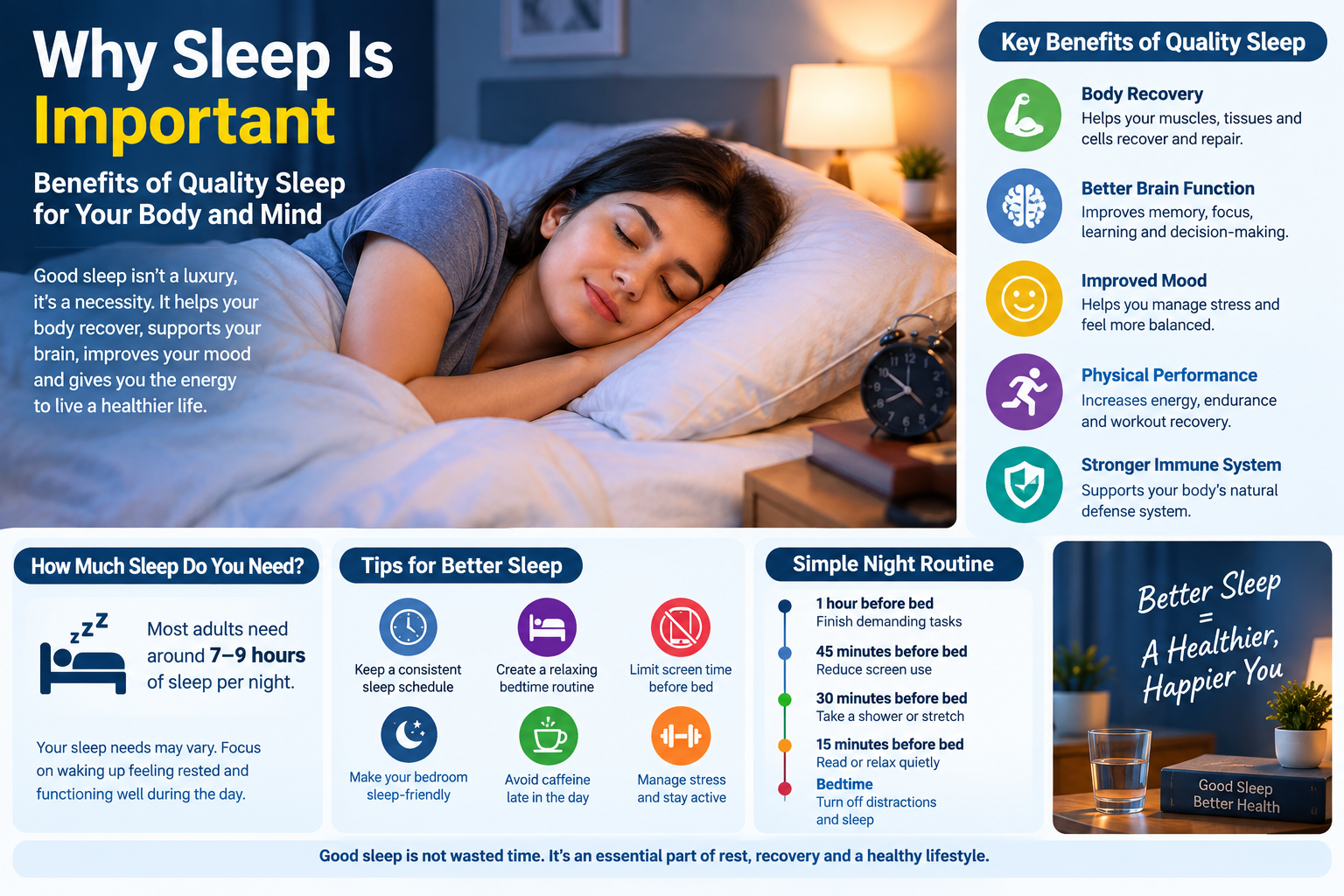
For most adults, health organizations generally recommend around 7–9 hours of sleep per night.
Some people may naturally need more or less sleep. Instead of focusing only on a specific number, pay attention to whether you regularly wake up feeling rested and function well during the day.
7. Create a Consistent Sleep Schedule
One of the simplest ways to improve your sleep habits is to maintain a relatively consistent bedtime and wake-up time.
Try to:
- Go to bed around the same time
- Wake up around the same time
- Avoid frequently changing your sleep schedule
- Give yourself enough time to sleep
Consistency can help make your sleep routine easier to maintain.
8. Create a Relaxing Bedtime Routine
Your body and mind may need time to slow down before sleep.
Try creating a simple 30–60 minute wind-down routine.
You could:
- Read a book
- Take a warm shower
- Do gentle stretching
- Listen to relaxing music
- Practice quiet breathing
- Prepare your clothes for the next day
Choose activities that help you feel calm and comfortable.
9. Make Your Bedroom Sleep-Friendly
Your sleeping environment can also affect your ability to rest.
Try to keep your bedroom:
- Comfortable
- Quiet
- Dark or suitably dim
- At a comfortable temperature
- Free from unnecessary distractions
A comfortable mattress and pillow can also contribute to a better sleeping environment.
10. Limit Late-Night Screen Use
Phones, computers, and televisions can easily keep you engaged when you should be preparing for sleep.
Try reducing unnecessary screen use before bedtime. Instead of spending the last part of your evening scrolling through social media, consider reading, stretching, or listening to calm music.
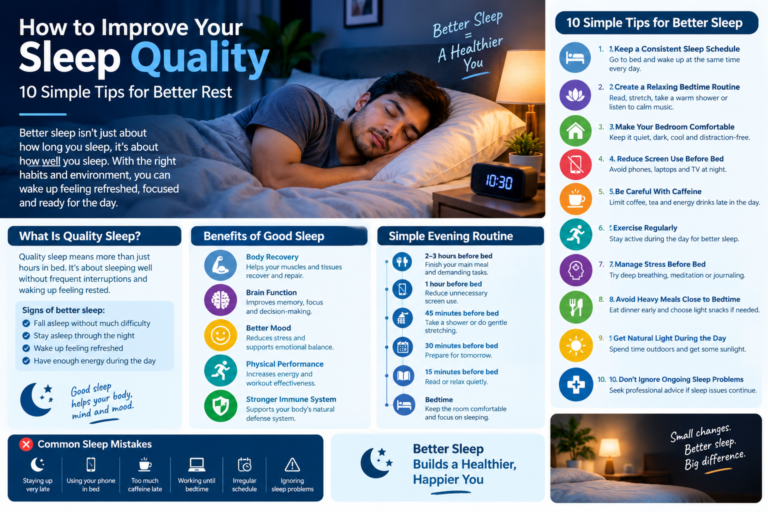
Simple Night Routine for Better Sleep
Here’s an easy routine you can try:
1 hour before bed: Finish demanding tasks.
45 minutes before bed: Reduce unnecessary screen use.
30 minutes before bed: Take a shower or do some gentle stretching.
15 minutes before bed: Read or relax quietly.
Bedtime: Turn off distractions and prepare for sleep.
You can adjust the routine according to your schedule.
Common Sleep Mistakes to Avoid
Some habits can make it harder to maintain a healthy sleep routine.
Common mistakes include:
- Frequently staying up very late
- Using your phone for hours in bed
- Having an inconsistent sleep schedule
- Drinking too much caffeine late in the day
- Working right up until bedtime
- Ignoring ongoing sleep problems
You don’t have to change everything at once. Start with one or two improvements and build from there.
Final Thoughts
Sleep is not wasted time. It is an essential part of rest, recovery, and overall health.
By maintaining a consistent sleep schedule, creating a relaxing bedtime routine, making your bedroom comfortable, and reducing unnecessary nighttime distractions, you can build healthier sleep habits.
Remember that good recovery is not only about exercise. Rest and quality sleep are also important parts of a healthy lifestyle.
Health Note: This article provides general wellness information and is not a substitute for professional medical advice. If you regularly have difficulty falling asleep, staying asleep, wake frequently, or feel excessively tired during the day, consider speaking with a qualified healthcare professional.